
Towns County Arrest Records and Court Charges
Arrest records are the law-enforcement side of the event. They may identify the arrested person, arresting agency, arrest date, booking status, total bond, warrant number, and alleged charge information if the jail or sheriff makes those fields available. The Towns County Sheriff's Office and Detention Center handle the jail and custody side, and the research file notes a possible vendor roster interface that must be treated with caution because no direct official sheriff link was found.
Court charge records are the court side. After arrest, the District Attorney or other prosecutor decides what formal charges to file. Those charges can appear in a complaint, accusation, indictment, or other charging document and then move through the court docket. The full case file and outcome belong with Towns County criminal court records, while real-time custody and booking detail belong with the jail and inmate channels.
The successful manifest image from the January 6, 2026 GBI former deputy arrest release is an example of an official arrest-related source, not a court conviction record.
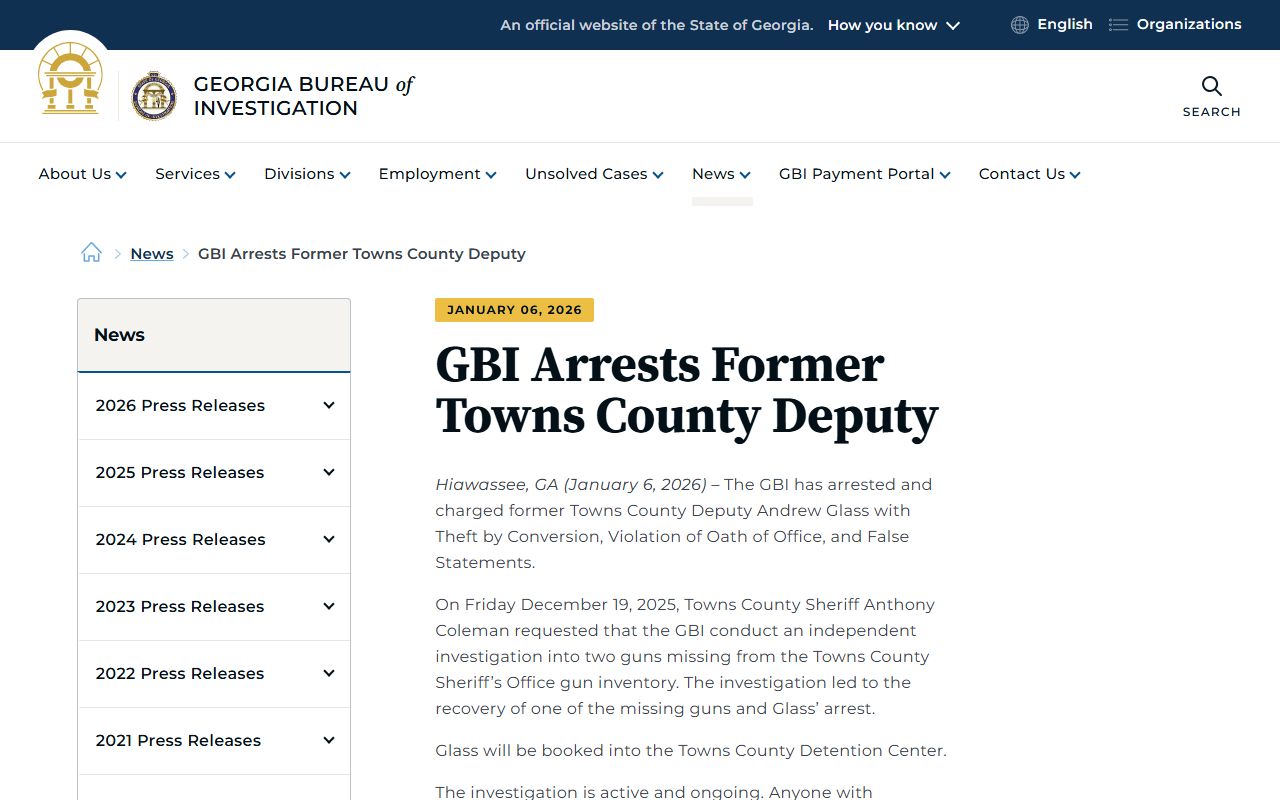
The release illustrates why arrest records and court charges must be read with dates, source type, and later court disposition in mind.
Find Towns County Arrest Records
Start with the record type. For custody, booking, bond, or jail questions, contact the Towns County Jail or use verified custody channels such as VINE or Georgia DOC when applicable. For formal charges and case outcome, use the Superior Court route through Georgia Courts e-access and PeachCourt, then contact the Clerk of Superior Court if the charge record or certified disposition is not available online.
- For jail status, call the jail or use verified custody-notification and offender-search channels.
- For court charges after arrest, use Georgia Courts e-access and the Towns Superior PeachCourt route.
- Search by defendant name or case number, then open the criminal docket if available.
- Read each charge, status, disposition, and sentence separately because one arrest can produce several counts.
- Confirm missing, sealed, older, or certified records with the Clerk of Superior Court or the arresting agency.
State-level criminal history lookups are not the same as a local court-charge search. A statewide history may show arrests and dispositions in summary form, while the court record may show motions, hearings, pleas, orders, and sentence details. Georgia record restriction under O.C.G.A. 35-3-37 may also affect public dissemination.
How Charges Get Filed After Arrest
The charge record begins when the alleged offense is placed into a court process. In Georgia felony practice, a prosecutor may use an accusation in some cases, while serious felony charges may proceed by indictment. A complaint can start or support lower-level criminal proceedings. The exact document depends on the court, offense, and prosecutor decision.
| Complaint | Accusation | Indictment | |
|---|---|---|---|
| Filed By | Officer or prosecutor, depending on stage | Prosecutor | Grand jury |
| Common For | Initial or lower-level criminal matters | Prosecutor-filed Georgia criminal charges | Felony charges returned by a grand jury |
| Record Role | States alleged conduct and starts court handling | Formalizes the charge filed by the state | Formal felony charging document |
The District Attorney for the Enotah Judicial Circuit is Jeff Langley. The Towns local DA office is listed at the county courthouse, and the Prosecuting Attorneys' Council lists the circuit office in Blairsville. The DA prosecutes felony and other state criminal matters in the circuit.
Charge Status and What It Means
Charges can change after arrest. A prosecutor may add, amend, reduce, or drop counts. A judge may dismiss a charge. A defendant may plead to one count while another count is dismissed. PeachCourt support materials indicate that criminal docket data can include charges, dispositions, proceedings, and calendar events where the court provides them.
| Status | What It Means |
|---|---|
| Pending | The charge is still open and no final disposition is shown. |
| Amended / Reduced | The charge wording, count, severity, or offense level changed during the case. |
| Dismissed | The court or prosecution ended that charge without a conviction on that count. |
| Nolle Prosequi | The prosecutor chose not to continue that charge. |
| Convicted / Sentenced | The charge resulted in a guilty plea, verdict, or other conviction and a sentence entry. |
A successful manifest image from the August 4, 2025 GBI inmate death investigation release is included because it is an official law-enforcement source tied to Towns County jail context.
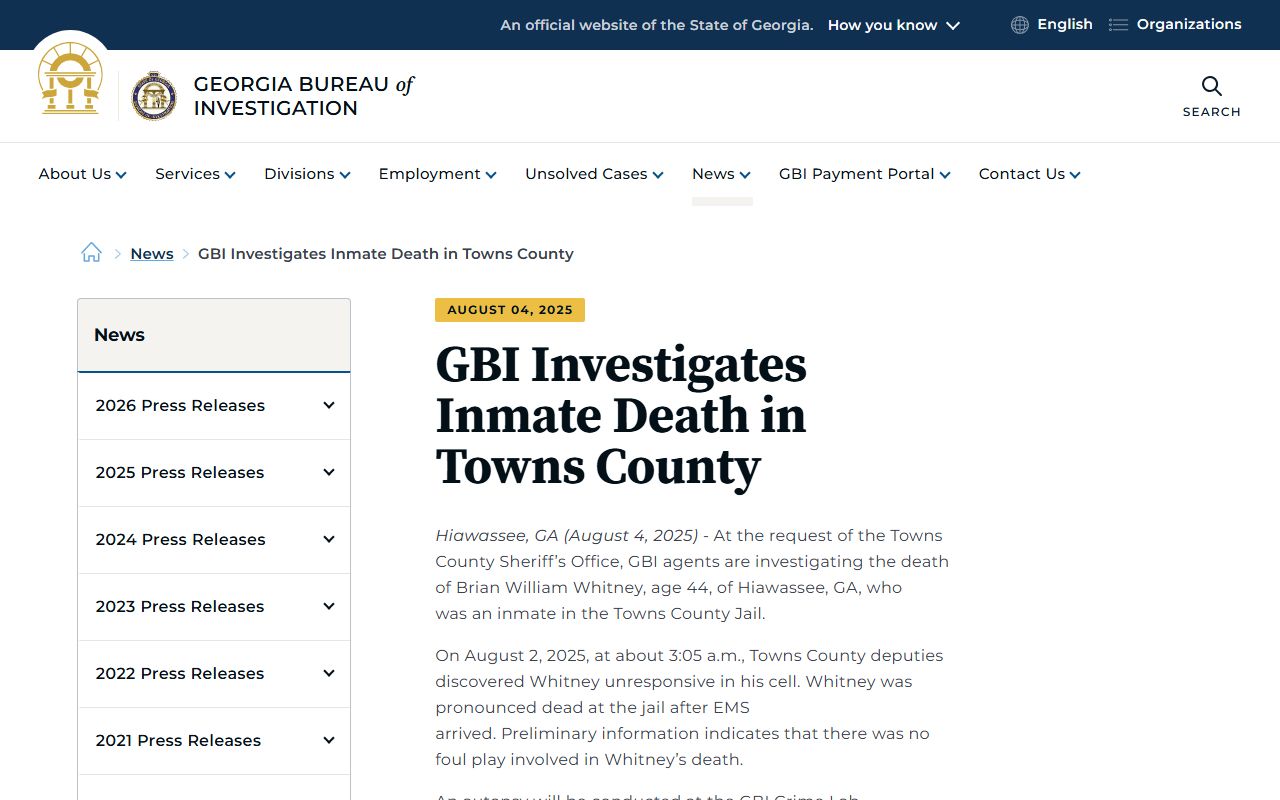
That release is investigatory context, not proof of a court charge or conviction, which is why source type matters.
Charges vs. Convictions
A charge after arrest is an allegation in the court system. A conviction is the outcome after a guilty plea, guilty verdict, or other qualifying court disposition. Towns County arrest records may identify alleged charges at booking, but the court docket must be checked for final disposition and sentence.
| Charge | Conviction | |
|---|---|---|
| Stage | Accusation | Verdict or plea |
| Burden of Proof | Probable cause | Beyond reasonable doubt |
| Public Record | Often visible unless restricted | Often visible unless restricted or sealed |
| Best Source | Charging document and docket charge list | Disposition and sentencing order |
Sealed vs. Expunged Records
Georgia uses record restriction for eligible criminal history under O.C.G.A. 35-3-37. Restriction limits public dissemination. It does not mean every trace of an arrest, court charge, agency record, or docket entry vanishes from all systems. Some court files may also need a sealing order. Juvenile records and sealed adoption records have separate access limits.
| Sealed | Expunged | |
|---|---|---|
| Visibility | Closed from ordinary public view by law or order | Georgia research points to restriction rather than simple online deletion |
| Law Enforcement | May retain access under limited legal rules | Agency access depends on statute and record type |
| Eligibility | Depends on case type and court order | Check O.C.G.A. 35-3-37, prosecutor, court, and arresting agency |
Charge Codes and Severity Levels
A charge entry may include offense wording, a statute, charge type, count number, court, warrant number, bond, sentence field, or release field depending on the system. The research file noted those fields in a possible Towns roster template, but that roster was not verified through a direct official sheriff link. Use it only as a cautious lead, then confirm with the jail, sheriff, court, or PeachCourt record.
Severity matters. Felony criminal cases are Superior Court matters in Georgia. Magistrate Court can be involved at the warrant, first-appearance, bond, or preliminary stage. Hiawassee Municipal Court handles city ordinance and municipal traffic matters. One arrest may create several charges, and each charge may move differently through the docket.
Note: A booking charge is not the same as a certified final court disposition.
Statewide Charge and Criminal History Lookups
Statewide systems serve different purposes from Towns County charge records. The Georgia Department of Corrections offender query is useful for sentenced or state-custody records. Georgia VINE supports custody notifications where agency data is available. The court charge record itself remains tied to the court and clerk that handled the case.
The Sheriff's wanted page is another separate source. It lists current outstanding warrants for crimes committed in Towns County, but it warns that the page is not an official court record and should not be used as confirmation that a warrant is active or as probable cause. For active warrants, confirm with the Sheriff's Office, the issuing court, or an attorney.
A successful manifest image from the January 6, 2026 GBI Sheriff's Office official arrest release gives another dated official-source example.
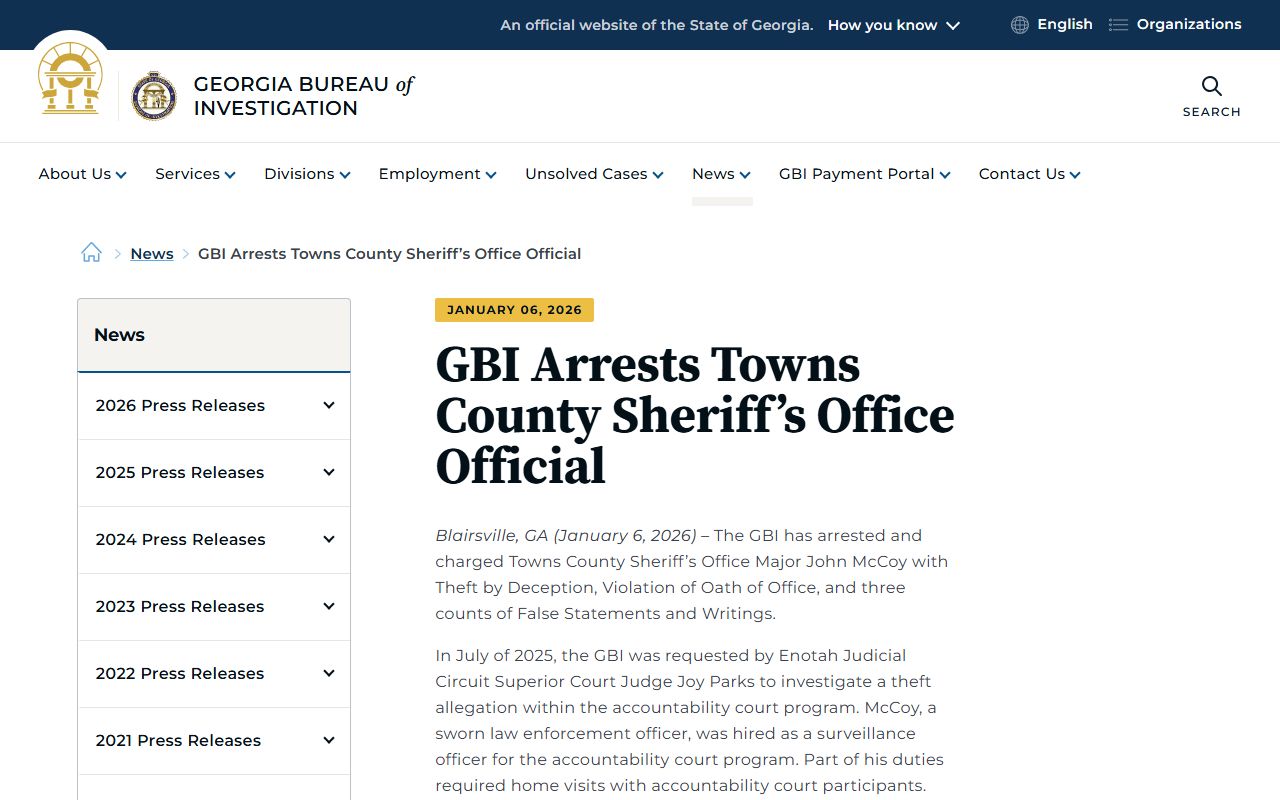
Official releases can document an arrest event, but the court docket is still needed to track charge status and final outcome.
Background Check Considerations
Arrest records and court charges can be misunderstood when used outside their legal context. A charge does not prove guilt. A dismissed charge may still appear in some systems until corrected, restricted, or sealed under the proper process. Employment, housing, insurance, credit, and tenant screening require FCRA-compliant consumer-reporting procedures rather than casual public-record review.
Important: Do not treat a charge entry as a conviction without checking the disposition.
The successful manifest image from the July 2, 2026 GBI suspended sheriff arrest release is dated and should be read as a source-specific update.
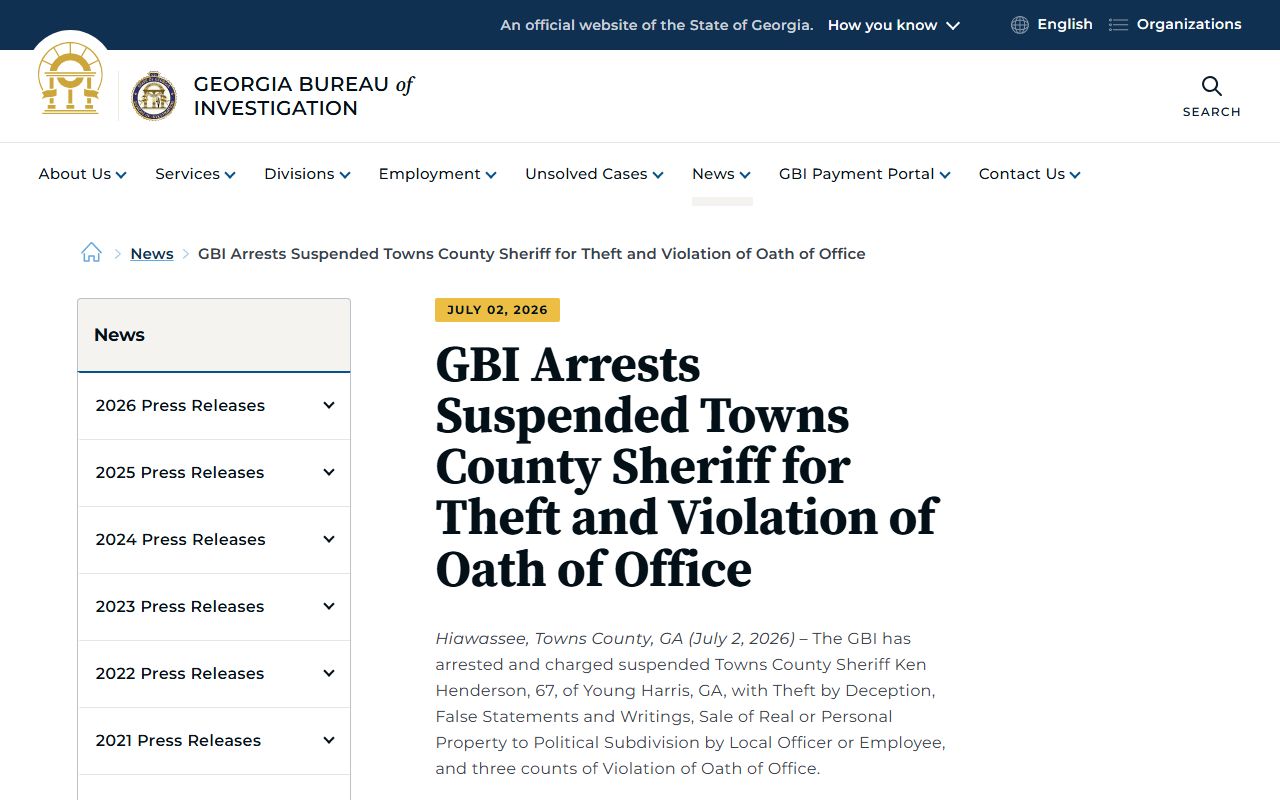
The research file also notes that local sheriff pages list Anthony Coleman while state sources refer to suspended Kenneth Henderson, so leadership claims need dated wording.
Restricted Towns County Charge Records
Restricted Towns County charge records may include juvenile matters, sealed court files, criminal history restricted under Georgia law, sealed warrants, active investigation material, and records with protected personal identifiers. A public arrest notice, jail entry, or wanted notice does not override a later restriction, dismissal, or court order.
A person seeking restriction should identify the arresting agency, charge, case number, court of disposition, and final result. If the case was dismissed, nolle prossed, dead docketed, acquitted, or otherwise eligible, Georgia's record-restriction statute may apply. Fees and Towns-specific forms were not located in official sources, so call the Clerk of Superior Court, the prosecutor, or the arresting agency before filing.
The successful manifest image from the Georgia Governor's 2026 executive orders page supports the dated suspension-order context noted in the research file.
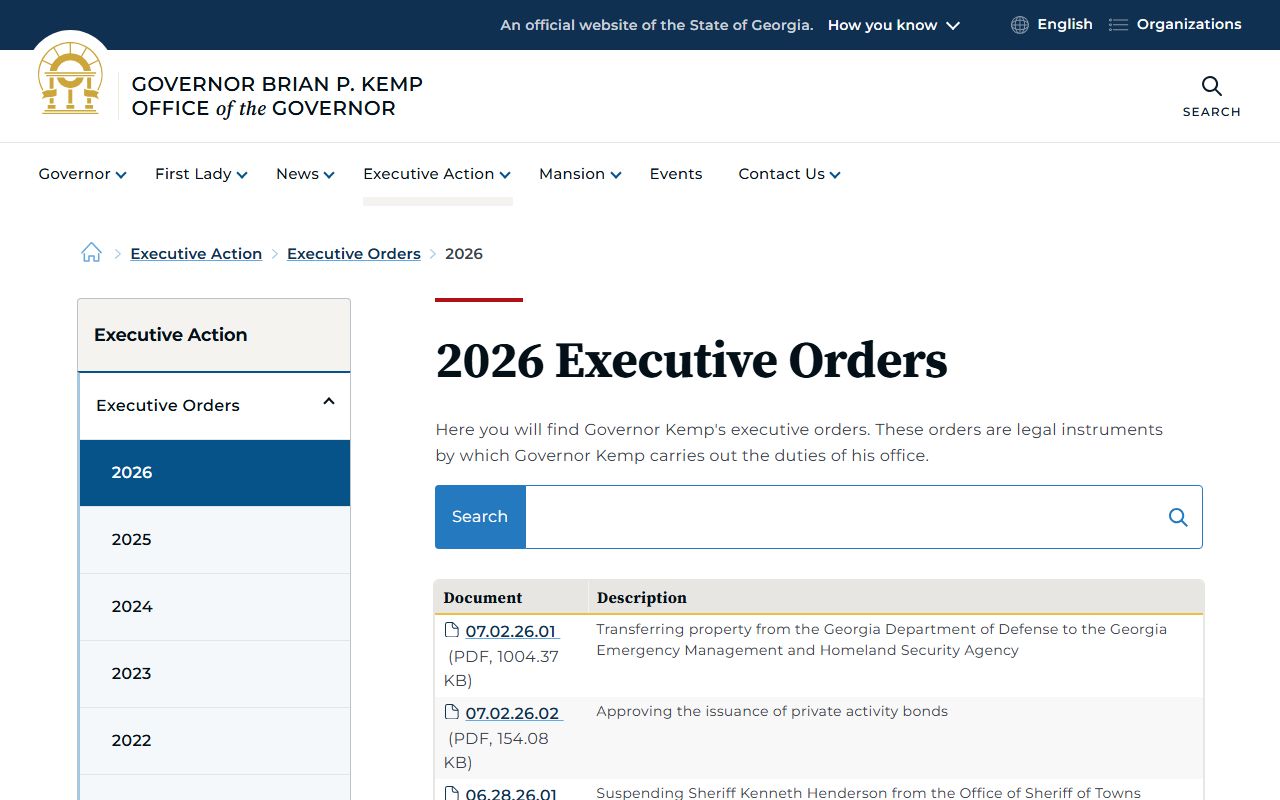
Executive-order context is not a substitute for a court case record, but it helps explain why current public-source wording may conflict across official pages.